From Rare Books to Embodied Song: A Summer Fellow Reimagines Song Literature I
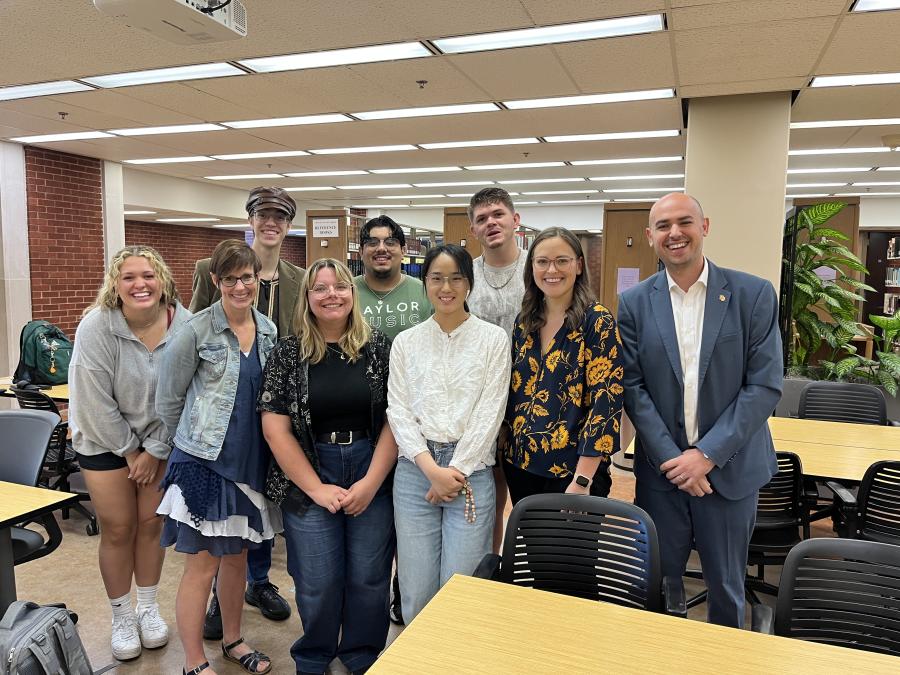
When Dr. Morgan Manifacier began reimagining his Song Literature I course, he didn’t start with digital innovations, or lesser-known recordings. He started in special collections. Through a summer fellowship with Baylor’s Arts & Special Collections Research Center (ASCRC), Dr. Manifacier partnered with music librarian Dr. Bethany Stewart to transform how students encounter the art song tradition — not only as repertoire to perform, but as objects, technologies, and histories to explore.
Dr. Manifacier: Each Fall, I lead Song Literature I; a class that surveys the vocal repertoire of German, French, and Italian composers. When I applied for the library fellowship through the ASCRC, my goal was to explore how I could use Baylor’s special collections to inspire my students and help them engage deeper with the course material. As Dr. Stewart and I started working together, it became clear that one way forward was to reclaim the embodied, physical elements at the core of art song – illustrated poetry collections, beautiful volumes of scores, and the printing technologies that made them possible.
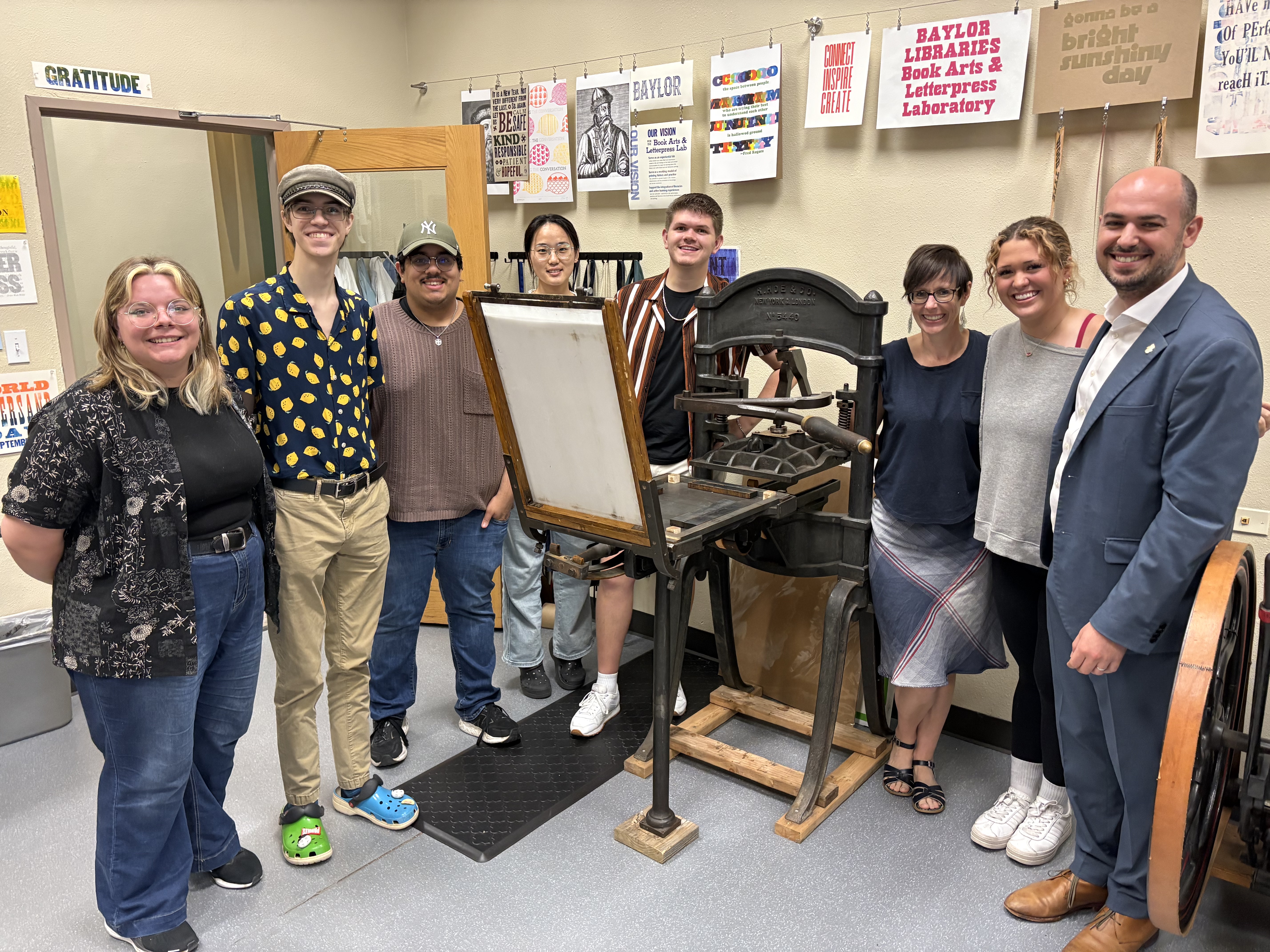
Dr. Stewart: Our approach to curating class visits at the ASCRC always begins with faculty partnerships: we align our knowledge of the collections and special collections pedagogy with faculty objectives for their courses. For Dr. Manifacier’s first class visit, we pulled special collections materials and facsimiles from our general collection, and grouped items according to the main thematic divisions of the class. Since several of the facsimiles students viewed at the ASCRC were either manuscripts or early printed scores, Dr. Manifacier and I also wanted to lead students in exploring aspects of music making technology and its impact on the music itself. The Book Arts & Letterpress Lab (BALL) offers the perfect setting for this. With Jon Snyder and Brett Harper from the Makerspace, we 3D-printed a set of type capable of reproducing Strozzi’s song, Non c'è più fede, using single-impression printing.
Dr. Manifacier: Students reproduced that single-impression printing process during a second library visit, as it was done originally in 1664. This was the first time this had ever been done at the BALL. One student wrote that “upon printing our music, I felt very accomplished and admired the novelty of what we had just created. […] I’m extremely grateful for this hands-on learning opportunity.”
Dr. Stewart: We conducted an assessment of the visit to the BALL, and 100% of student respondents indicated that: the experience helped them better understand how music was produced and shared in the past, they enjoyed the experience, and they were curious to learn more about the history of music printing.
Dr. Manifacier: At the end of the semester, students reflected about their experiences in the library. One comment stood out to me and brought a rewarding joy to my heart: “The library visits were fantastic; they added a lot to the experience. The hands-on learning […] helped me feel like I was truly mastering the material. I feel more well-rounded as a student, as a researcher, and as a musician because of this class."